

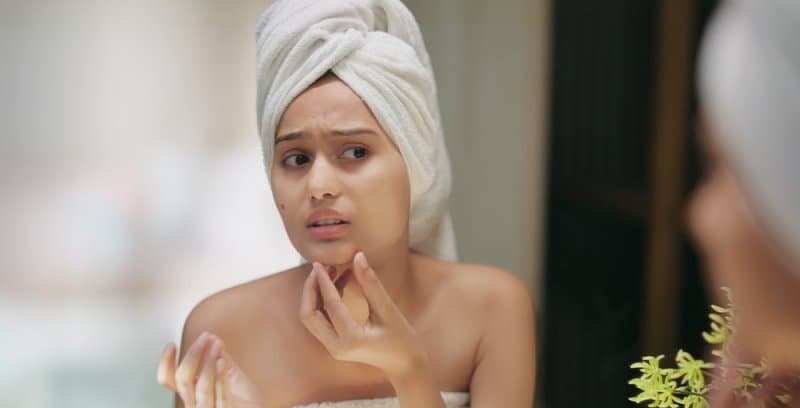
A big presentation, a move or a rough month at home, and suddenly your chin breaks out or an old eczema patch returns. Stress and skin health are tightly linked because the hormones that help you handle pressure also affect oil glands, immune cells, and the skin barrier.
Stress rarely acts alone. It worsens what is already there, then piles on through poor sleep and nervous habits. In this blog, we explain the biology behind stress and skin health, walk through eight common problems, and share prevention tips that fit a busy life.
Your brain and skin talk constantly through hormones and nerve signals. When stress rises, that conversation shifts in ways you can often see.
Stress and skin health connect first through hormones like cortisol and adrenaline. These change blood flow, immune activity, and oil production, and skin responds fast.
The effects of stress on skin also come from behavior. People under pressure sleep less, snack more, and touch their faces more.
Cortisol can increase oil production, which feeds acne. High levels may also weaken the barrier, leaving skin drier and more reactive. Cortisol also slows wound healing, which is why stress and skin problems can linger for weeks.
That is one of the clearest effects of stress on skin and a key part of stress and skin health.
The effects of stress on skin show up in several distinct ways. Most people deal with one or two, not all eight. These stress and skin problems are among the most common, and each has a simple prevention step.
Notice how many stress and skin problems are flares of existing conditions. Managing stress and skin health usually means protecting skin that is already vulnerable.
Stress and acne share one of the clearest links among stress and skin problems. Breakouts often arrive right on deadline.
Stress does not create acne from nothing, but it can trigger sudden breakouts in people already prone to them. Cortisol and androgens raise oil, and inflammation follows.
Picture a law student who clears up every summer, then breaks out along the jaw each finals week. That is classic stress and acne. Staying on a retinoid or benzoyl peroxide year-round prevents the cycle better than reacting once stress and acne hit.
Stress-related skin rashes often look like conditions you already know. Stress simply turns up the volume.
Yes. Grief, conflict, and anxiety can trigger hives, eczema, psoriasis, and rosacea flares without any physical trigger. Logging stress-related skin rashes alongside sleep and diet helps a dermatologist find patterns.
Stress-related skin rashes that blister, spread fast, or come with lip or throat swelling need urgent care. The table sums up how stress and skin problems connect, including stress-related skin rashes and stress and acne.
| Skin Problem | How Stress Triggers It | Prevention Tip |
| Acne | More oil and inflammation | Keep treatment consistent. |
| Eczema | Weaker barrier | Moisturize twice daily. |
| Hives | Immune cells release histamine. | Antihistamines and a trigger journal |
| Rosacea | Flushing response | Slow breathing, avoid heat. |
Stress management for healthy skin works alongside good products and is the most direct lever on stress and skin health. Calmer weeks mean fewer flares and faster healing.
Keep your routine short when life gets hectic. A gentle cleanser, moisturizer, and sunscreen are enough, so pause new products. Pair that with stress management for healthy skin, and you will actually do:
Stress management for healthy skin is not about removing all stress. It is about recovering faster, which protects stress and skin health long-term.
Stress and skin health are tied together through hormones, immune signals, and daily habits. Cortisol can raise oil, weaken the barrier, and slow healing, which is why stress and acne, stress-related skin rashes, and dullness show up in hard weeks.
What helps is a steady routine plus simple recovery tools, which is what stress management for healthy skin really means. If the effects of stress on skin keep repeating, bring the pattern to a dermatologist. Protecting stress and skin health is part self-care and part skincare.
Research links intense stress to faster graying through effects on pigment cells. Genetics still play the biggest role.
Yes. Regular exercise lowers stress hormones and improves sleep, which supports stress and skin health. Cleanse soon after workouts so sweat does not clog pores.
Indirectly. Poor sleep during stressful periods makes dark circles look worse, one of the subtler effects of stress on skin. Rest and a cool compress help.
Possibly. Mindfulness may lower perceived stress, a low-cost form of stress management for healthy skin.
See one if stress and skin problems keep returning, leave scars, or hurt your sleep. A dermatologist can adjust treatment and suggest support.
This content was created by AI