

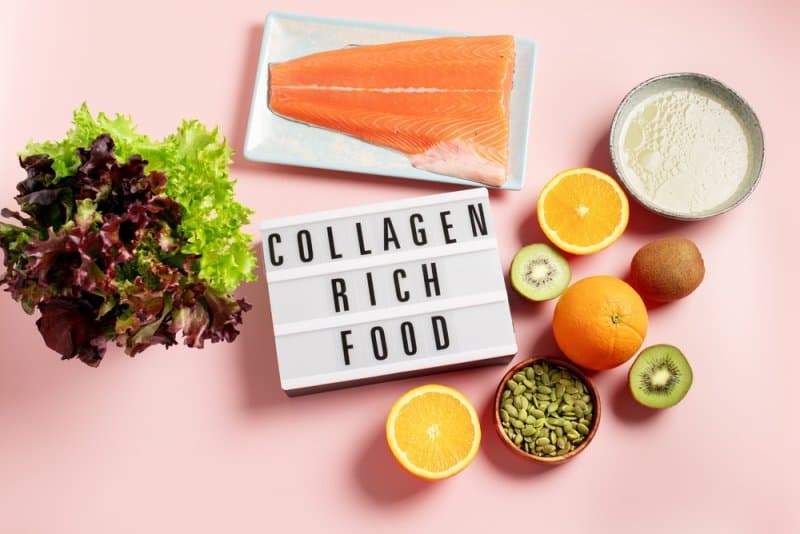
Collagen keeps skin firm and springy, and your body makes less of it from your mid-twenties onward. That is why foods that boost collagen get so much attention. The catch is that most advice blurs two different things. Some foods contain collagen, while others supply the raw materials your body uses to build its own.
Knowing the difference helps you shop smarter and skip pricey hype. In this blog, we sort foods that boost collagen into practical groups, build a day of meals around them, and flag the habits that quietly undo your effort.
Not all foods that boost collagen work the same way. Some deliver collagen directly, and others provide what skin cells need to make it.
When you eat foods rich in collagen, your gut breaks the protein into amino acids and small peptides. Your body then decides where to use them, so bone broth does not travel straight to your cheeks.
That is why nutrients that support collagen production matter just as much. Without enough vitamin C and protein, cells cannot assemble strong fibers, no matter how much broth you drink.
Foods rich in collagen all come from animals, because collagen lives in connective tissue, skin, and bones. Plants do not contain it.
These foods rich in collagen are easy to find in U.S. grocery stores.
Foods rich in collagen add protein, but they are optional. Vegetarians can still make collagen from plant foods.
Think of collagen as a building and these nutrients as the crew. Missing one slows the whole job.
| Nutrient | Role in Collagen | Strong Food Sources |
| Vitamin C | Required to link and stabilize collagen fibers | Bell peppers, kiwi, strawberries, oranges, broccoli |
| Protein (glycine, proline, lysine) | Supplies the amino acid building blocks | Eggs, chicken, fish, Greek yogurt, lentils, tofu |
| Zinc | Supports enzymes involved in skin repair | Oysters, beef, pumpkin seeds, chickpeas |
| Copper | Helps cross-link collagen for strength | Cashews, sesame seeds, dark chocolate, mushrooms |
Severe vitamin C deficiency causes scurvy, where weak collagen leads to bleeding gums. Covering nutrients that support collagen production daily prevents that breakdown, and most people get there with foods that increase collagen naturally.
Collagen boosting foods simply package nutrients that support collagen production in forms you already eat.
Shopping by aisle makes collagen boosting foods easy to remember. You likely buy many already. In produce, grab red bell peppers, citrus, kiwi, berries, and leafy greens. The best foods that boost collagen often sit here, since vitamin C is the nutrient people most often miss.
At the meat counter, chicken thighs, eggs, and salmon cover protein. In the pantry, lentils, chickpeas, pumpkin seeds, and cashews handle zinc and copper. These collagen-boosting foods work best together:
Lists of collagen-boosting foods help, but meals are what you eat. Here is how foods that increase collagen naturally fit an ordinary day.
Breakfast could be scrambled eggs with spinach and strawberries. Lunch might be a lentil and roasted red pepper salad topped with pumpkin seeds. Dinner works as salmon with the skin on, broccoli, and a mug of chicken bone broth, with cashews as a snack.
That day covers all the nutrients that support collagen production using foods that increase collagen naturally and no powders. Rotating collagen-boosting foods keeps it interesting, and other foods that increase collagen naturally, like tofu, suit meatless days.
Building collagen is half the job. Foods for healthy skin also protect what you already have. Tomatoes, carrots, blueberries, and leafy greens supply antioxidants that help defend against sun-related damage. Salmon and walnuts add omega-3 fats that support the skin barrier.
High sugar intake works the other way through glycation, which stiffens collagen fibers. Pair foods for healthy skin with daily sunscreen and no smoking. Foods for healthy skin and sun protection do more together than apart, and both help foods that boost collagen pay off.
Foods that boost collagen are about steady, balanced eating rather than one magic ingredient. Foods rich in collagen, like bone broth and fish skin, supply it directly, while vitamin C, protein, zinc, and copper are the nutrients that support collagen production your body needs to make its own.
Protecting that collagen from sugar, smoke, and sun matters just as much, which is where foods for healthy skin come in. Start with one change, like peppers at lunch or salmon with the skin on. Over a few months, foods that boost collagen, sunscreen, and good sleep can help skin look firmer.
Some research suggests collagen peptides may modestly improve skin elasticity, but results vary, and supplement quality is loosely regulated. Foods that boost collagen also bring vitamins and minerals.
Yes. Plant foods that increase collagen naturally include tofu, lentils, seeds, and citrus. They cover the amino acids, vitamin C, zinc, and copper your body uses.
Skin renews slowly, so expect to wait at least a couple of months. Eating foods that boost collagen consistently matters more than any single meal.
Heat and long boiling reduce it. Eat some foods for healthy skin raw, or steam and stir-fry them briefly.
Moderate coffee is not known to harm collagen directly. Watch added sugar and syrups, which work against your skin.
This content was created by AI