

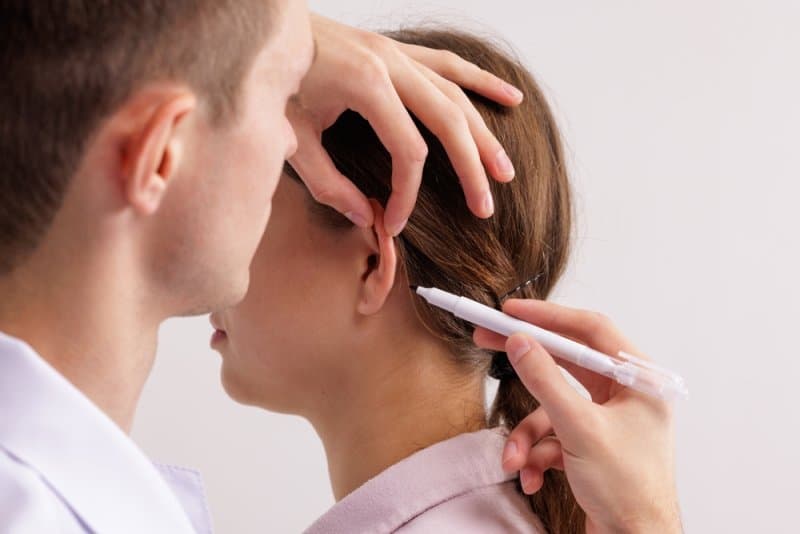
Ear shape and structure can impact your looks and how you feel day to day.
Some people have ears that are not developed properly, and many suffer from partial or complete destruction of their ears due to injury, burns, or treatment for a health condition. Luckily, there are a number of options for ear reconstructive surgery.
Ear reconstruction is a surgery to repair, reshape, or rebuild the outer ear. It can be done to restore a congenital deformity, absent ear structures, trauma, or after removal of tissue for cancer. The goal is to create an ear that looks natural and to restore function if it can be maintained or improved.
Restoring the structure of the ear is a significant surgical challenge, as ear reconstruction is not just cosmetic; the procedure often requires creating new tissue and cartilage. Surgeons typically adapt grafts of skin or natural cartilage for each patient; however, for some, prosthetic implants may be used.
Ear reconstruction surgery can help people born with ear conditions, traumatic injuries, or extreme structural issues. Microtia is a condition in which one or both ears are underdeveloped or have not formed properly. Microtia ear reconstruction involves reconstructing a normal-looking ear.
Another candidate for treatment for burns, accidents, infections, or tissue removal treatment is those who suffered from burns, accidents, infections, the recovery changes time, or tissue removal when they were being treated for cancer. Ear deformity correction can also be done for people with birth defects or other damage. Not every ear defect requires a surgical intervention.
The procedure to reconstruct the ear will vary based on the amount of the ear being reconstructed. Your surgeon will also do a physical examination of your ear and review your medical history. Hearing tests may be ordered to help in deciding which type of ear reconstruction is best for you. Common approaches include:
In this procedure, cartilage harvested from the rib cage is used to form an ear frame. The cartilage is carved to resemble an ear and inserted under the skin. Those with microtia, a condition characterized by absent or underdeveloped ears, and those who have experienced extensive tissue loss may undergo ear cartilage reconstruction.
A prosthetic ear is an artificial substitute made to look like the natural ear. It can be adhered with medical-grade glues or implanted attachments. This option can be used if the natural tissue reconstruction is hard to achieve or if the patient opts for an alternative to major surgery.
If you lose only a portion of your ear due to injury or surgery, your ear reconstruction surgeon can often recreate the shape of the missing section by using tissue from the surrounding area, skin grafts, and cartilage. Your surgeon can help you determine which of these ear reconstruction methods will work best for you.
Otoplasty is a procedure to change the shape of the external ear. Otoplasty is frequently performed to reduce prominent ears that protrude from the side of the head. This procedure will not replace a missing ear, but it is a treatment option in some cases of ear deformities.
The patient's healing response varies based on the healing reaction of the patient and whether more than one operation is necessary. Patients are typically discharged home with dressing/bandages applied over the operative field, which may remain for a few days depending on the surgeon's preference.
Mild swelling and pain can be experienced throughout the early recovery. Sleep on the side of the operated ear for at least 2 weeks. Protective headbands might be worn in some procedures to support the reconstructed ear. Proper care of the operated site, activity restrictions, and visits to the doctor for follow-up are helpful for improved recovery. Extensive reconstruction of the ears may need longer recovery.
The cost of Ear Reconstruction procedures differs with the type of procedure and the surgeon's experience, hospital charges, anesthesia, and even location. The costs for a basic ear repair will be different from the costs of a more complex reconstruction that requires rib cartilage or multiple surgeries.
Insurance coverage may also consider whether the follow-up to the procedure is medically required or is more cosmetic in nature. Surgery after an injury or deformity might be covered by some insurance policies. This is why you need to insist on an itemized listing of the surgeon's charges, operation center costs, anesthesia, follow-up visits, and any additional required procedures.
Like most surgical procedures, nose reconstruction surgery is not without risks. You could experience bleeding, infections, scarring, swelling, and changes in sensation of the skin. When cartilage is inserted in order to substitute the missing tissue, the shape of the substitute framework and scarring may be issues.
Choosing an experienced reconstructive surgeon can help reduce the chance of complications that could have otherwise been avoided. A patient should discuss their medical history, desired results and restrictions, and other possibilities with their surgeon in the consultation.
An individual may need to inform the medical team about complications or wound infections after surgery.
Ear reconstruction is one of the most common procedures for making the shape and appearance of ears more attractive. Whether for congenital deformities such as microtia or for ear injuries or medical treatments, reconstructive surgery can improve appearance and function.
Learn about the various options, the procedure, recovery, and potential costs involved with this procedure so you are ready when you consult your doctor about treatment options.
Reconstruction of the external ear usually has no effect on a person's ability to hear. Other hearing tests, hearing aids, or another operation might be necessary for problems with the ear canal or the middle or inner ear.
Natural tissue reconstruction can be permanent but may change as the body heals and ages. Prosthetic ears will need care and may need to be replaced at a later stage. The length of time a prosthetic ear lasts depends on the method of reconstruction and the individual.
The type of scar you may develop depends on the skill of the surgeon, the amount of incision used, and how your body heals. In most cases, the incisions are hidden in natural creases and folds of your ears if a clinician is able.
Yes, not just kids are candidates. Adults with congenital ear anomalies, trauma, or loss can also be candidates for the procedure, depending on their overall health, available tissue, and the extent of reconstruction needed.
Achieving perfect symmetry might not be feasible since ears are not identical in shape, size, and position on the head. All attempts are made to shape the ears so that they are symmetrical and look normal and balanced in view of the face. The shape of the ears might vary depending on the healing process.
This content was created by AI