

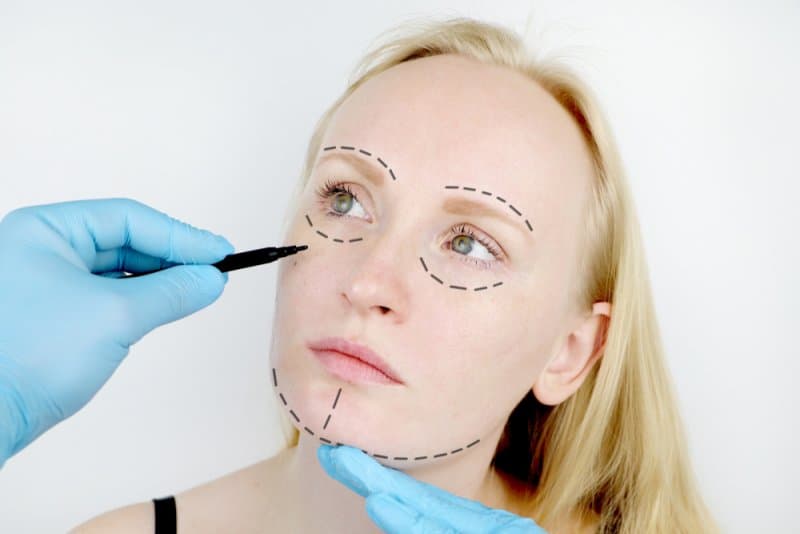
Injuries, disabilities, and certain medical conditions can also change the appearance and even the function of the face. Reconstructive surgery procedures have the potential to repair or even replace certain parts of the face.
If you are interested in finding out about the facial reconstruction surgery types and how they work, you can speak to your qualified surgeon.
Everyone's skull and facial bones are shaped and positioned differently, which is why there are many options when it comes to facial reconstruction surgery. Below are seven of the most common types of facial reconstruction surgery, along with the issues they treat.
Facial trauma surgery is used to treat injuries from falls, sports accidents, accidental blows, or other traumas. Such injuries can involve the cheekbones, nose, jaw, eye sockets, and other areas of the face. To treat these injuries, the jaw or other bones may be reset and held in place with small plates and screws.
Another part of the process is that if there's, for example, damage to the skin, soft tissue, muscle, etc., then they may be repaired by the same approach. These facial reconstruction procedures help to maintain the face and restore the symmetry of the face.
A cleft lip and palate repair corrects birth defects of the upper lip or mouth that fail to close during development. A cleft lip results in a slit in the upper lip, and a cleft palate results in a slit in the roof of the mouth.
Surgeons perform facial opening repairs involving fine incisions and tissue rearrangements. One of these facial plastic surgery procedures can enhance the appearance of the face, feeding, speech development, and other mouth functions. Further procedures may be necessary as they get older.
Rebuilding the nose is done to regain the form and structure of the nose following trauma, disease, or revision. This can result from fracture or loss of nasal bone, cartilage, or skin.
Sometimes, a doctor may also reshape or reallocate tissue or take cartilage from the rib or ear of the patient to replace missing tissue. Facial reconstruction using reshaping or grafting can be used to restore missing tissue, resulting in an appearance that looks more natural.
Ear Reconstruction involves reconstructing the ear to improve the shape or form of the external ear following trauma, surgery, or a congenital problem. It may involve taking local tissue or forming a new framework of the ear out of cartilage.
Surgeons may use artificial implants or tissue from elsewhere in the body. These reconstructive facial surgery options can be used to enhance the symmetry and look of the ears. Further procedures may be required depending on how much tissue is absent.
Cancer removal can result in significant loss or damage to facial skin, muscles, and underlying tissue. Reconstruction restores the area after the surgeon has taken out the cancer, which may be on the nose, lips, cheeks, or forehead.
The definitive closure depends on the size and location of the wound and may be accomplished with skin grafts, local flaps, or tissue moved from elsewhere on the body. The wound is to be covered, eye motion preserved, and the contours of the face restored.
Facial reanimation surgery aims to restore some movement and control of the face to people with paralysis of the face. Facial paralysis can result from damage to the nerves or following a certain medical condition or operation.
Surgeons may perform nerve grafts, nerve transfers, or muscle transfers to give patients movement in the face. These facial reconstruction options can help give smiles, close the eyes, and restore the symmetry of the face. The outcome of the procedure depends on the paralysis.
If your face has been damaged or subjected to treatment, leading to areas of exposed tissue and/or skin, a skin graft consists of skin taken from somewhere else on your body and transplanted over the site.
If you're wondering, what types of facial surgery repair damaged facial structures? This surgery is the answer. In tissue flap procedures, a piece of skin and possibly other tissue—like fat, muscle, or blood vessels—is transferred to cover a wound, and its blood supply is kept intact or reattached. These are useful techniques for larger facial tissue repairs and for recreating natural facial contours.
The operation you require will depend on the severity, location, and type of the sprain. In some cases, if the sprain is extensive or involves some different tissues, you may need more than one operation.
Typical methods of facial reconstruction are
The facial reconstructive procedures can be carried out separately or in combination, depending on the level of reconstruction required.
The right course of action will be dictated by where the injury has occurred, how serious it is, and the nature of the injury. For example, a broken jaw may be fixed with surgery, while large areas of missing skin may have to be grafted or reconstructed using a flap.
For example, patients who have nerve damage could have facial reanimation, while patients who are missing some of their jaw or cheekbones might have bone grafts or implants. Before making a recommendation about reconstructive facial surgery, a carefully trained reconstructive surgeon considers the affected tissues, facial function, medical history, and desired outcome.
Facial bones are often put back into their original position after a fracture and held in place with the use of medical plates and screws. The absence of a section of bone can be replaced by either bone from another site of the body or an implant.
Other methods of soft tissue reconstruction include the placement of skin grafts, tissue flaps, or microvascular transfers. These types of facial tissue reconstruction replace lost fat, skin, and muscle while at the same time maintaining blood flow and stimulation. The use of imaging and surgical planning may lead to increased accuracy in complex cases.
Facial reconstruction surgery varies from facial trauma to birth differences to the tissue loss caused by cancer to the weaknesses caused by paralysis. Knowing the various facial reconstruction surgery options will provide patients with a better idea of what is available.
Patients can then discuss their expectations with the surgeon and the various possibilities that would restore function and appearance.
For many facial reconstructions, the results are permanent, especially if the structures have healed well. But aging, changing health status, complications, or subsequent trauma can alter the result. A few patients may need revision procedures years later.
The severity of scarring is related to the procedure, incision site, skin type, and healing time. We always try to position the incision to make the scar as inconspicuous as possible. We cannot always guarantee that a scar can be totally removed.
Yes, various reconstructive procedures could be performed to lengthen or shorten bones, repair tissues, and neutralize facial asymmetries. How much will it be restored? It would depend on the pre-existing condition, tissues, and surgical options.
Many more extensive facial reconstructive surgeries are performed under general anesthesia because it often involves deeper tissues or a longer surgical time. A few of the smaller procedures can be done with local anesthesia with sedation. Anesthesia administered is based on the patient and procedure.
Yes, further procedures will likely be required if the initial reconstruction does not attain the expected functional and structural outcome. Patients may also be required to undergo staged procedures where tissue and bone reconstruction cannot be done at one time.
This content was created by AI