

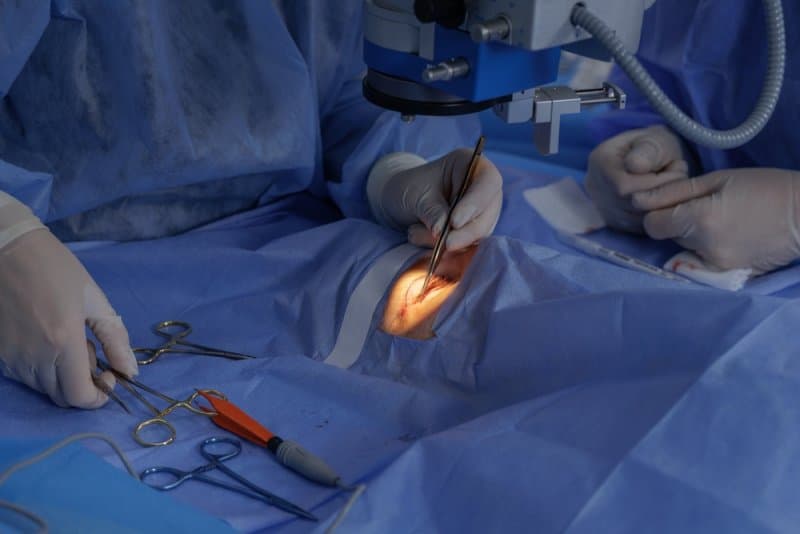
Your eyelids don't just define your face. They defend your eyes, apply tears, and facilitate optimal vision. Damaged eyelids and their functions can result from trauma, tumor, or previous surgery, and eyelid reconstruction surgery can not only restore your natural look but also repair any type of damage to eyelids and their functions.
Learn what the procedure involves, how it is performed, and the recovery process.
Eyelid reconstruction is a microsurgical repair for damaged or missing eyelid tissue. The goal of eyelid reconstruction is to preserve the opening and closing of the eyelids, blinking, and eye protection, while creating symmetrical eyelids. In some cases, one can repair a small area of the eyelid, while in others, the entire eyelid may be reconstructed.
The eyelid cosmetic surgery performed for cosmetic purposes only is very different from reconstructive eyelid surgery, as this form of reconstructive surgery is focused more on function rather than the cosmetic aspect. The work required can be to repair the skin, muscle, tissue, or the inside of the eyelid.
Eyelid reconstruction surgery is used for any loss or damage that interferes with the eyelid's structure or function. The size of the defect can be small and still be problematic if the eyelid cannot close fully or opens the eye's surface.
Common reasons for eyelid repair surgery include
Eyelid defect reconstruction in these cases can restore the protective function of the eyelids and alleviate discomfort caused by imperfect blinking or eyelid closure.
The choice of the surgical procedure depends on the amount of tissue lost, which structures are damaged, and the study of the eye and the tissue surrounding the wound to assess any possible options for surgery.
Most of these surgeries are performed with local anesthetic, with or without sedation. Reconstruction that is more extensive may need to be done under general anesthesia. Several procedures are used for eyelid reconstructive surgery.
To use this technique, the surgeon will bring the edges of remaining eyelid tissue together and close the wound with fine stitches. This will only be possible if there is sufficient healthy tissue to allow a strong closure without tension.
Tissue flaps may be needed for larger defects: With this approach, healthy skin and tissue from a neighboring area are shifted into the defect, staying attached to its blood supply. Tissue flaps can help avoid distortions to the eyelid that could result from simple closure.
If the surrounding tissue is not sufficient to cover the defect, the surgeon may opt to place a skin graft (a patch of skin) harvested from another part of the body. This skin graft is then sutured into place.
In certain advanced eyelid repairs, the inner lining or additional support structures may need to be rebuilt as well. The surgeon may take tissue from a different area of the body to recreate these layers and shape the eyelid.
Due to the fact that the upper and lower eyelids have distinct functions and structures, the method of repair could and should be different.
Reconstruction of the upper eyelid aims to re-establish the eyelid's natural movement and function—blinking and closing. Loss of function can result in problems with blinking, inadequate closure, and exposure of the cornea.
Depending on the size of the defect, the surgeon may choose a direct closure, skin graft, or tissue flap. These specialists will also avoid damaging the eyelid crease and structures supporting the eyelid.
Rebuilding lower eyelids: reconstruction of the lower eyelids restores the normal position of the eyelid and provides support. If the lower eyelids are damaged, the eyelids may turn outward (ectropion), or the eyelids may be pulled downward away from the eye to expose the eye.
The plastic surgeon will reconstruct the defect with local flaps, skin grafts, or other remaining tissue that can support the area. Placement of the reconstructed area is especially critical, as the tear film and the distribution of tears may be altered by the repair.
Eyelid reconstruction side effects include swelling, bruising, pain, and tight eyelids. These side effects are the result of tissue removal and are very common in the early stages of healing.
Your doctor may recommend that you use prescription eye drops and ointments and cold packs and give you information on wound care. You shouldn't rub the eye or put pressure on it, and you also shouldn't do any exercises your doctor says you can do. You will need to have check-up visits to see if it is healing well.
Recovery time depends on the size of the defect, the surgical technique used, and the body's ability to heal. Simple eyelid repairs are likely to heal quite quickly, but grafts and tissue flaps may take weeks or even longer to heal.
Swelling and bruising can take a week or two to settle, but your tissue changes can last for months. If you had staged reconstruction, you might need another operation after the first repair. Follow post-op instructions and visits to your specialist to speed up your recovery.
Eyelid reconstruction helps rebuild the tissue loss of the eyelid, which is further reconstructed by numerous surgical procedures based on the status of tissue loss and the condition of eye removal owing to cancer, trauma, burns, or birth defects.
An eye specialist, an expert in plastic eye surgery, will inform you about the options and the results.
Yes, it can help improve vision in cases where the eyelid damage causes difficulty with opening the eye or abnormal exposure of the cornea. Cataracts or retinal disease should be targeted separately.
This therapy can be used on either one or both of the eyes, depending on how much damage there is and how the patient is feeling. A majority of the time, this treatment works on one defect, although both sides can be operated on simultaneously.
Some scarring can occur since the treatment will involve stitching back the skin and tissue underneath. The surgeon will try to locate cuts in places that will leave the least visible scarring and use techniques to minimize the scars. They are likely to be less apparent as they heal.
Revision is an option if the eyelid position, function, or look is not achieved after primary repair. Many large defects require multiple planned procedures in stages to finish the reconstruction.
There is more to consider than age when deciding if a patient is a candidate for the procedure. Health status, ability to recover, overall condition of the eye, and severity of the eyelid damage.
This content was created by AI