

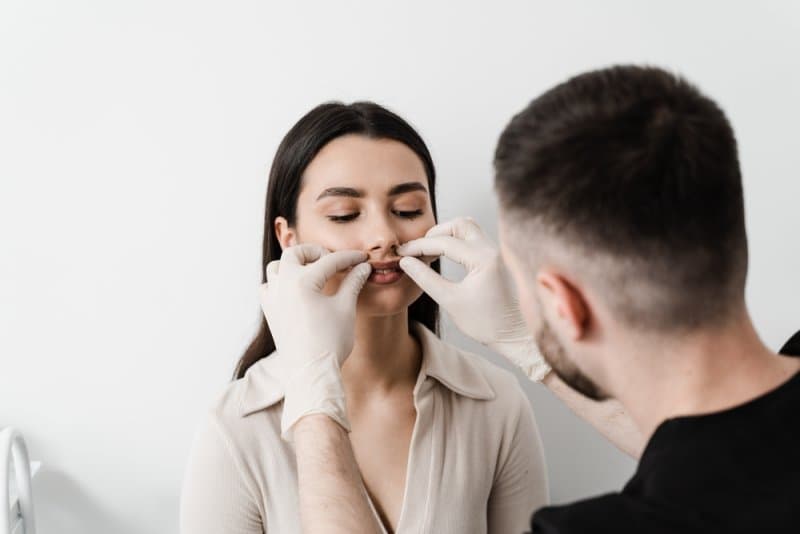
Lip scars, damaged lips, or lip deformities, whether from lip injuries, removal of skin cancer, or other health conditions, can alter the appearance of your lips significantly.
Your lips have been changed, and this may affect your ability to bite into food, smile, and talk properly. Your lip enhancement procedure can also help you to regain your natural-shaped lips as well as improving their appearance and function.
Lip reconstruction surgery is a surgery that rectifies absent, injured, or malformed tissue in the lips. Lip reconstruction requires reconstructing the surface, muscle, and interior of the lips along with the original shape and motion of the lips. The purpose of lip reconstruction is to maintain the function of the mouth as well as the facial aesthetic balance.
Cosmetic procedures are designed to change the appearance and size of the lips. Reconstructive lip work repairs the damage that can happen to lips, whether it is from the removal of cancer, trauma, burns, or lip surgeries performed in the past. For the more modest damage, the surgeon may be able to take tissue from other areas of the body or nearby tissue to replace the lost tissue.
There are various things that can cause damage that needs to be fixed with a surgical procedure. For example, skin cancer can be a reason for this type of damage, especially if a tumor is removed from the lip and a large part of the lip is left.
Physical trauma is another reason. Lip reconstruction after injury may be performed if the patient has suffered damage due to an automobile accident, animal bite, burn, or deep incision. Lip defect reconstruction may be needed due to previous unsuccessful surgery, trauma, or birth defect.
How are lips reconstructed after skin cancer removal?
The surgery might be recommended if the patient is having difficulty closing the mouth or has difficulty managing saliva, speaking, or eating. The surgeon examines the defect to see if lip reconstruction after cancer or injury is necessary.
We start by looking at your injury. We look at how much tissue is missing, the skin around it, the muscle, and the inside of the mouth. We take into account some of the finer points, such as the cupid's bow, the lip border, and the corner of the mouth.
If there is damage to the lips, the specialist uses surgery to repair the area while the patient is still in the operating room. Small wounds can be stitched closed; larger wounds may require excess tissue to be sewn closed or repositioned. The layers of the lips are sewn back together while preserving lip function, sensation, and closure.
Which method you use will be determined by the size and location of the defect. There are methods that involve the use of local tissue and methods that involve tissue transfer from a different site.
Methods are chosen based on individual requirements, without applying a standard technique. Source Research
Reconstruction of upper and lower lips is done differently because each of the two lips has its own anatomical features. The aim of the upper lip reconstruction is to maintain the shape of the lips, such as the cupid's bow, philtrum, and the border of the lips.
Lower lip reconstruction tends to focus more on the importance of keeping the ability to close the lips and control saliva. The lower lip also has a significant role in drinking, eating, and speech. Larger defects in the lower lip may be reconstructed with local flaps or tissue from elsewhere.
A primary goal of both procedures is to preserve oral competence, that is, to ensure the patient is capable of lip closure without food, liquid, or saliva escaping from the mouth.
Healing varies based on the procedure, damage to tissues, and overall health. Swelling, pain, bruising, and difficulty opening and closing the mouth in the first few days after treatment are perfectly normal. You may be advised to eat soft foods and to avoid causing further trauma to the involved area.
Continuing care is imperative to the healing process, and the patient needs to keep the area clean, make post-surgery visits, and follow the instructions given during or before the treatment. Sometimes, the procedure may need some extra time or correction to improve lip movement, symmetry, or shape.
Lip reconstructive surgery can be an effective approach for people suffering from lip loss or damage resulting from cancer removal, injuries, or other conditions. It is not solely cosmetic and helps patients regain function—speaking, eating, and closing the mouth—as well as a return to the form and balance of the face.
With the right surgical plan and techniques, lip reconstruction can make a significant difference.
It depends on the size and type of defect. Smaller reconstructions can be less complex operations, and large or complex reconstructions may mean long operations, tissue transfers, and multiple operations.
During this time, it can also affect movement in the face, even after it has healed. The final result will depend on how much your surgeon can repair the muscles, nerves, and other tissues beneath your skin. Some movements may be changed forever.
Loss of sensation may be present after the operation initially, especially if nerves were involved in the operation. There may be some return of sensation as healing progresses, but this depends on the type of operation and the amount of tissue affected.
Yes. You can reconstruct children's lips in some instances for congenital defects, injuries, or other deformities. The procedure, timing, and method will vary depending on the child's age, facial development, medical condition, and the severity of the defect.
No. Many smaller defects can be repaired in one operation. Some flap procedures do involve a planned second operation, and other patients may have further procedures done to improve symmetry, mouth opening, and appearance.
This content was created by AI