

Ever stood in the skincare aisle, squinting at a box that says retinol next to another that says retinoid? You're not alone. The names look nearly identical, so plenty of people assume they mean the same thing. They don't. And if you're wondering what retinol is in the first place, good news: it's simpler than the labels make it sound. Let's sort out retinol vs retinoids, step by step.
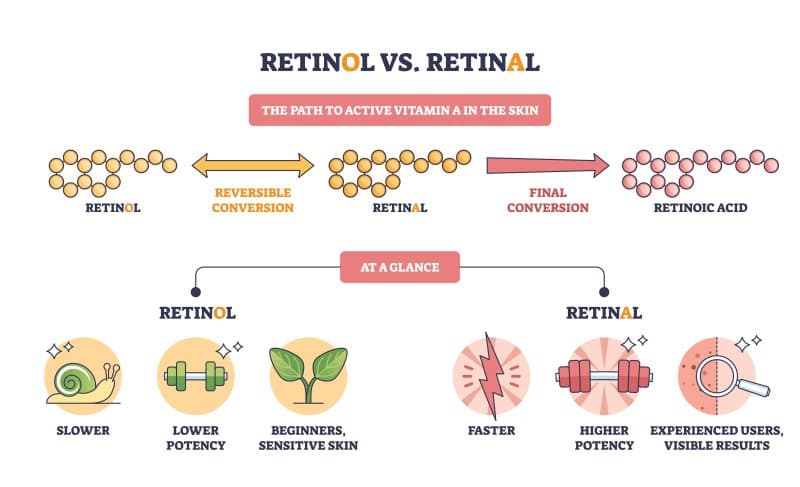
Retinol is vitamin A in a form you can buy off the shelf. No prescription, no appointment. It shows up in serums, night creams, and lotions. Here's the clever part. Your skin has to convert retinol into retinoic acid before it can actually do anything. That takes a few steps, so retinol works slowly and treats your skin kindly. It's why most people start here.
Retinoids are the bigger family. Think of retinol as one sibling in a crowd that also includes tretinoin, adapalene, and tazarotene. A few sit on drugstore shelves. The stronger ones live behind a prescription pad. Some come as creams or gels, and a few are even pills for serious conditions. So what are retinoids actually doing? They nudge your skin to renew itself faster and help it build collagen.
Here's the short version of the difference between retinol vs retinoids: one is a category, the other is a member of it. Every retinol is a retinoid, but not every retinoid is retinol. Retinol needs extra steps inside your skin before it kicks in, which keeps it mild. Stronger retinoids skip some of that work. You get quicker results, but your skin may complain louder.
| Factor | Retinol | Prescription Retinoids |
| Availability | Over the counter | Needs a prescription |
| Strength | Mild to moderate | Strong |
| Speed of results | Slower | Faster |
| Irritation risk | Lower | Higher |
| Best for | Fine lines, mild acne, first-timers | Moderate to severe acne, deeper aging signs, psoriasis |
The types of retinoids run from barely-there to seriously strong. Before you grab a product, it helps to know where it falls on that ladder. Your skin will thank you.
| Type | Access | Common Use |
| Retinyl esters | Over the counter | Gentle antioxidant support, mild wrinkles |
| Retinol | Over the counter | Fine lines, uneven tone, mild acne |
| Retinal | Over the counter | Wrinkles, rough texture |
| Adapalene | Over the counter (0.1% gel) or prescription | Acne |
| Tretinoin | Prescription | Moderate to severe acne, aging signs |
| Tazarotene | Prescription | Acne, psoriasis, sun-damaged skin |
You might spot a pattern. Gentler forms need more conversion inside your skin, while stronger ones are closer to the finished product. Strength and irritation usually climb together, so the latter matters. Each rung suits a different goal.
Over-the-counter retinol is the easiest door to walk through. Grab it at a pharmacy or order online, no waiting room involved. Strengths differ from brand to brand, so read the label and start low. Retinyl esters are the mildest, retinal sits just above retinol, and adapalene 0.1% gel is aimed at acne. Most retinoid skincare products on regular shelves are usually fine for beginners.
Prescription retinoids include tretinoin and tazarotene, plus oral medicines like isotretinoin for severe cases. A doctor makes that call, not you. These are often prescribed for moderate to severe acne, acne scarring, psoriasis, and sun-damaged skin. They're stronger, so early redness, peeling, and dryness are more likely. Expect check-ins during the first few weeks. And pills are never safe during pregnancy.
The benefits of retinol won't show up overnight. Give it a few weeks, then a few months. With steady use, retinol can:
Early changes often appear within several weeks. The bigger payoff takes longer. Stick with it.
The benefits of retinoids stretch further, especially at prescription strength. They do what retinol does, just faster and more intensely. They're also trusted for acne scarring, psoriasis, and sun-damaged skin. A large body of research supports how well they renew skin, which explains why dermatologists keep reaching for them. The catch? A bumpier adjustment period. Having a professional guide you through it makes a real difference.
Retinol for beginners should feel almost boring. That's the goal. Pick a low-strength product and use it once or twice a week. Add another night only when your skin feels calm. If it stings or flakes, take a few days off and moisturize. A lot of irritation comes from rushing, not from retinol itself. A patient start gets you the smooth skin without the angry red cheeks.
A solid retinol skincare routine doesn't need ten products. Four steps will do, and the rest of your lineup should stay gentle while your skin adjusts.
Hold off on strong exfoliating acids on retinol nights. Add one new product at a time so you can tell what's helping and what's bugging your skin.
So where do you land on retinol vs retinoids? It depends on your skin, your goals, and how patient you are. Use this table as a rough guide, then run it by a dermatologist if you're unsure.
| Your Situation | Better Starting Point |
| First time using vitamin A | Over-the-counter retinol |
| Sensitive skin | Low-strength retinol, slow ramp-up |
| Occasional breakouts | Over-the-counter retinol |
| Persistent or moderate to severe acne | Prescription retinoids, with a dermatologist |
| Deeper wrinkles | Prescription retinoids |
Honestly, there's no single winner. The best option is the one you can use regularly without trashing your skin barrier. Plenty of people begin with retinol and move up later, with a professional's help, if their goals need something stronger.
Any retinoid can irritate your skin, and retinol is no exception. Here's what people commonly notice:
The stronger the product and the more often you use it, the louder these tend to get. Sunscreen helps. So does going slowly. Pregnancy is a special case. Oral retinoids can harm a developing baby, and experts advise skipping retinoid-based skincare, even over-the-counter retinol, while pregnant or breastfeeding. Check with your doctor first.
Retinol and retinoids come from the same vitamin A family, but they don't act the same on your face. Retinol is mild, easy to find, and a smart first step. Prescription options bring more power for tougher problems. Whichever way you lean, go slowly, moisturize, and wear sunscreen. Not sure where to begin? A skin specialist can match a product to your goals. Good skin rewards patience.
Yes. Retinol is one type of retinoid. The word retinoid covers the entire vitamin A family, including gentle over-the-counter options and stronger prescription medicines that your doctor has to approve first.
Most people notice small changes within several weeks, such as smoother texture. Deeper results, like softer fine lines, usually need a few months of steady use. Consistency matters far more than product strength.
Yes, many people do. A common approach is vitamin C in the morning and retinol at night, which keeps things simple and lowers the chance of irritation. Add sunscreen after your morning step.
Not always. Retinol and a few other options sit on regular shelves. Stronger ones, like tretinoin and tazarotene, require a prescription. A dermatologist can help you decide which strength fits your skin and goals.
Often yes, if you go slowly. Choose a mild formula, apply it once or twice a week, and pair it with a gentle moisturizer. If redness or burning keeps returning, stop and ask a dermatologist.
This content was created by AI