

Be honest. How many products are sitting in your bathroom right now, and how many did you actually need? Most of us pile on serums, scrubs, and masks, then wonder why our face burns when we splash on plain water. Often the culprit is a worn-down skin barrier. Let's walk through what it is, how it gets hurt, and how to fix it without buying anything fancy.
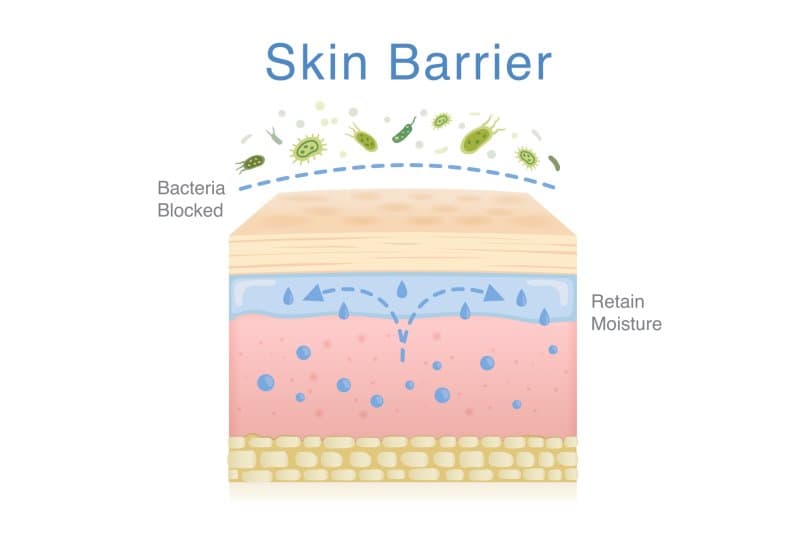
Scientists call it the stratum corneum, the very top layer of your skin. Picture a brick wall: flat, tough cells are the bricks, and fats like ceramides, cholesterol, and fatty acids are the mortar holding everything together.
That wall has a double shift. It keeps bacteria, pollution, and irritants outside, and it stops the water inside you from evaporating. Wall intact? Skin feels comfortable. Wall cracked? You'll know.
Strong skin barrier health means your face stays comfortable through AC blasts, sunny commutes, and dusty roads. Hydration holds steady, so you don't get that tight, papery feeling by afternoon.
There's a practical side too. Creams absorb properly when the barrier is intact. When it's compromised, even a gentle lotion can sting. Fix the foundation first, and your expensive serums will finally get a fair shot at working.
A damaged skin barrier rarely appears out of nowhere. It's usually a slow pile-up of small habits, plus a few things you can't control. The usual suspects:
Notice how many are self-inflicted? That's actually good news, because habits can change.
Catching the signs of a damaged skin barrier early can spare you weeks of misery. The tricky part is that they overlap, so a single symptom rarely tells the whole story. Here's a quick cheat sheet of what people usually notice first.
| Sign | How it shows up |
| Dryness | Tight, rough, flaky patches |
| Itching | An urge to scratch that won't quit |
| Redness | Warm, blotchy, easily annoyed skin |
| Stinging | Burning from even basic products |
| Breakouts | Pimples that seem to come from nowhere |
| Infections | Bacterial, viral, or fungal problems that keep returning |
Two or three of these at once? Time to stop experimenting and give your skin a break.
Wondering how to repair your skin barrier without a shopping spree? Do less. Seriously. Most skin settles down once the harsh stuff stops. Stick with the three habits below for two to four weeks, and resist switching things every few days. Jot down what you use, too. It makes spotting your personal triggers much easier. Your future self will thank you.
Cut it down to a gentle cleanser, a moisturizer, and sunscreen. That's it. Shelve the scrubs, peels, retinoids, and strong acids until your skin stops complaining. When you bring exfoliation back, a soft cloth or a mild chemical exfoliant is kinder than gritty scrubs. A boring routine can be a healing one, so give it a few weeks before you judge it.
Healthy skin is slightly acidic, sitting around pH 4.0 to 5.8. Researchers suggest cleansers between pH 4.0 and 5.0 work best. Ordinary bar soap is often alkaline, so it strips oils and leaves skin angry. Look for "pH-balanced" on the label and pick a creamy or gel cleanser. If your face feels squeaky after washing, that's not clean. That's stripped. Skip hot water too.
Pat your face dry, but leave it a little damp, then moisturize within a minute or two. Damp skin traps water far better. If you're very dry, choose a cream over a runny lotion. Apply it morning and night, with sunscreen on top during the day. Price matters less than consistency, and a plain fragrance-free cream often beats a fancy jar.
Labels love big promises. These ingredients for skin barrier support actually have research behind them. Pick based on how your skin feels, add one new product at a time, and patch test on your inner arm before it touches your face.
| Ingredient | How it helps |
| Ceramides | Refill the "mortar" between skin cells |
| Petrolatum | Seals in water; blocks almost 99% of loss |
| Hyaluronic acid | Draws water into the skin |
| Glycerin | Pulls in moisture and softens skin |
| Plant oils (jojoba, sunflower, argan) | Replenish lipids and calm irritation |
| Urea | Binds water and smooths rough patches |
Oils suit some people and break others out, so go slowly.
Skin barrier repair won't happen overnight, but it won't take forever either. Be patient. Mild irritation often calms down within a couple of weeks once you stop the trigger. Eczema, or damage that keeps being repeated, can take longer. Measure progress by comfort. Less stinging, softer skin, and fewer flare-ups mean it's working. And please, don't add three new products halfway through.
Good skin barrier protection comes down to small, dull habits you repeat. Nothing glamorous:
Each one is cheap and easy. Together, they protect better than any single product.
Home care only goes so far. Book an appointment if redness, oozing, or pain drags on for more than a few weeks, or if you spot pus, fever, or spreading warmth. Suspect eczema, psoriasis, or a reaction to medication? Get that checked as well. A specialist can pin down the cause and suggest treatment, and catching problems early usually keeps them small.
Your skin barrier works all day without asking for credit, which is why we only notice it when something goes wrong. Wash gently, moisturize often, and lean on ingredients with real evidence. Learn the signs of a damaged skin barrier so you can act fast. Start with one small change tonight. Honestly, that's enough to get the ball rolling, and your skin will tell you if it's working.
Hold off for now. Retinol can sting and make irritation worse while your barrier is weak. Once your skin feels calm again, bring it back slowly, maybe two nights a week, layered over moisturizer.
Yes, it does. Oily skin can still have a weak barrier and lose water. Go for a light gel or lotion with glycerin or hyaluronic acid, because skipping moisturizer can trigger even more oil.
Sometimes. It helps some people, but it can clog pores on acne-prone skin. Patch test first. If your face breaks out easily, lighter oils like jojoba or sunflower are usually safer bets.
Absolutely, and it's one of the most common causes. Scrubs, brushes, and strong acids strip away protective lipids. Keep it to once or twice a week, and stop immediately if your skin burns or peels.
Not by itself. Staying hydrated is good for your body, but barrier recovery depends mostly on what you put on your skin and what you avoid. Water supports the process; it doesn't replace it.
This content was created by AI