

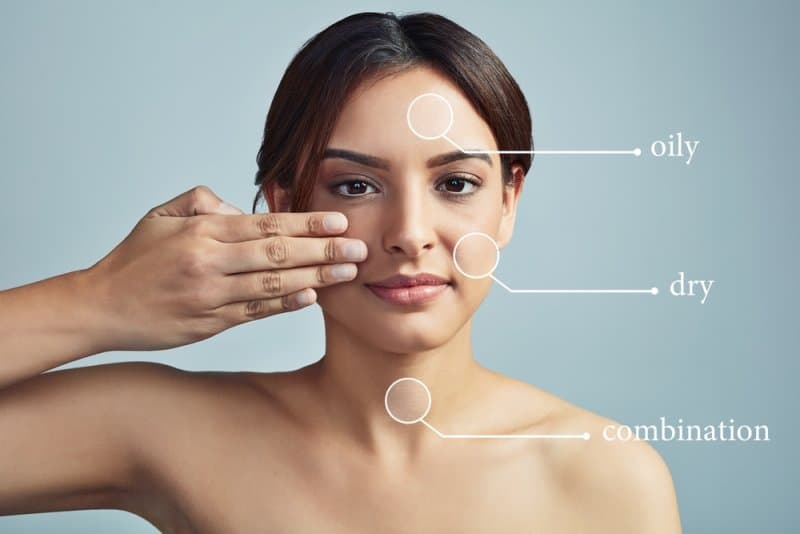
Knowing about your skin is the first step towards better skincare. Products that suit some people may make others feel oily, tight, and even cause irritation because our skin is different in terms of oiliness, hydration levels, and sensitivity. Knowing about the properties of each type of skin will help you make decisions without falling prey to all trends. This guide will tell you everything you need to know about skin types.
Skin type is the general nature of your skin and its natural tendencies, especially regarding the production of oil and the retention of moisture, as well as sensitivity to products or changes in the environment. In most skincare advice, there are usually five main skin types. The following skin types mentioned here are just the beginning of knowing about your skin.
Dry skin is the skin type that does not have enough natural oil to be comfortable. This kind of skin becomes tighter after washing and has the appearance of rough, flaky, and dull skin. It also feels itchy sometimes and even shows fine lines due to the lack of moisture.
Dry skin should use gentle cleansers and heavy moisturizers with ceramide, glycerin, and petrolatum. Do not use too-hot water and do not exfoliate frequently because it can make dryness worse. Consult a dermatologist if your dryness is continuous and painful.
Oily skin type produces extra amounts of sebum, which is the natural oil secreted from the sebaceous glands. Oily skin is shiny, especially on the forehead, nose, and chin area. Pores appear enlarged, and oily skin may be the cause of clogged pores and the formation of pimples.
What you need is to control excess shine without dehydrating the skin. You should use a gentle cleanser, a light moisturizer that is noncomedogenic, and good sunscreen. Niacinamide and salicylic acid may be useful for dealing with the issue, but use actives slowly. Rough scrubbing and over-washing do not work well for oily skin.
Skin with a normal skin type is usually balanced. The skin is usually comfortable without any feeling of tightness or excess oiliness. The skin texture can be even, and the skin does not react to most products.
Even the skin that is normally balanced requires regular skin care. A mild cleanser, an appropriate moisturizer, and sunscreen can be used. Do not introduce too many exfoliating agents or active ingredients, as you do not have any problems with your skin at present. Maintaining the skin barrier is more useful than trying to change a naturally balanced complexion.
A combination skin type is characterized by varying features depending on the region of the face. The T-zone, which comprises the forehead, nose, and chin, can be oilier compared to the cheeks, which can be either normal or dry. Additionally, there is congestion in oilier regions, accompanied by tightness in other regions.
Flexibility of the regimen is key. First cleanse using a mild cleanser all over the face, then vary the amount of moisturizer based on regions; less moisturizer on the T-zone and more on dry areas if necessary. Do not base your treatment for all areas of the face on the oiliness of your nose.
Sensitivity is a type of skin that responds more quickly to products or environmental factors. Some of the symptoms may be redness, itching, burning, stinging, and irritation following the application of scented products, harsh exfoliants, or specific ingredients. The weather, hot climate, and friction could also induce an adverse reaction.
The skincare routine should be kept simple, and products should be selected based on those that are unscented and have few ingredients. New products should be patch-tested and added one by one to the routine. Sensitivity may exist alongside other skin types, and persistent skin issues can be related to conditions like eczema or rosacea.
If you were thinking about how to identify your skin type, then one method that could give you an initial idea is this:
Explain what you observe:
Remember that this method is not a reliable way to determine your skin type. The cleanser you use, environmental conditions, recent exfoliation, or skin irritation can give you false results. Try repeating this method the next day if there were some confusing results.
Knowing the difference between skin type and skin condition helps avoid the typical error of thinking of a transient problem as a permanent skin type.
Skin type refers to your inherent inclinations, such as oily or less oily skin. A skin condition, in turn, means what is going on right now. Such conditions as dehydration, acne, redness, irritation, and impaired skin barrier function may happen to anybody irrespective of their skin type.
In other words, an oily skin type can be dehydrated as well. An oily skin type will appear glossy but feel dry because it lacks water. Or a person who has usually well-balanced skin can become sensitive due to using too much exfoliating acids or a variety of newly introduced products. The terms dry skin and dehydrated skin cannot be used interchangeably since dry skin usually lacks oil and dehydrated skin lacks water.
Yes, although its underlying tendencies may remain relatively stable for long periods. Age, hormones, climate, and skincare habits can influence how your skin behaves.
The secretion of sebum tends to reduce with aging, making skin drier. Hormones during adolescence, pregnancy, or menopause can affect the oily aspect of your skin and lead to acne formation. A hot and humid climate will make you look shinier, while a colder and drier one will cause more dryness. Additionally, sun exposure and irritating ingredients in products may irritate your skin.
Look into the things you do with your skin when you notice that it starts acting differently, rather than thinking that you have to keep using the same products for eternity. You may just change something depending on the season. In case of sudden and persistent changes accompanied by itching, pain, or a rash, consult a doctor.
Your skincare routine should be uncomplicated and include only a few steps depending on your skin type. The key products you require are a mild cleanser, a moisturizer that suits you, and broad-spectrum sunscreen with an SPF of 30 or more, which you should use every day in the morning.
The following are tips on how to take care of your skin according to your skin characteristics:
Nighttime tips: Remove all traces of sunscreen, foundation, and other products from your face; follow up with moisturizer. Introduce one product at a time and see what works for you.
Knowing your skin type gives you a practical starting point for choosing products, but it should not limit how you respond to changing needs. Listen to what your skin tells you, separate permanent problems from temporary issues, and be consistent in your care. With a proper combination of cleansing, moisturizing, and protection from the sun, your skin will feel good.
Yes. Combination skin naturally has different oil levels across facial areas, while sensitivity can occur alongside dry, oily, or normal skin. Your routine should account for these overlapping needs.
No. Acne is a skin condition that can affect people with oily, dry, combination, or normal skin. Excess oil can contribute to clogged pores, but hormones, inflammation, and other factors also play a role.
Check how your skin behaves every few months and when seasons, hormones, or routines change. Reassess sooner if products suddenly cause discomfort or your usual routine no longer feels suitable.
Drinking enough water supports overall health, but it does not change your natural sebum production or permanently alter your skin type. Topical skincare and environmental factors also influence how hydrated your skin feels.
A dermatologist can help if you have persistent redness, itching, acne, scaling, or reactions that are difficult to understand. Professional assessment is especially useful when a skin condition may be mistaken for a skin type.
This content was created by AI